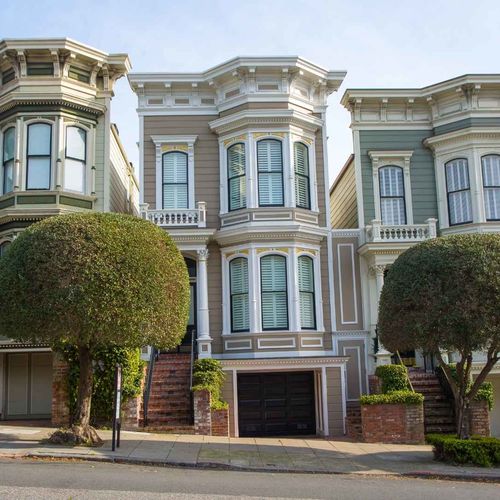
Buying in Mission Dolores in San Francisco in 2026: Prices, Streets, and How to Compete
If you are buying in Mission Dolores in 2026, you are probably not just buying “a condo.” You are buying a lifestyle that is hard to replicate anywhere else in the city: close to transit, close to nightlife, close to restaurants, and close to one of the best outdoor living rooms in the country, Dolores Park.
That is why this pocket stays popular even when other parts of the market soften. It is also why first-time buyers, move-up buyers, and relocation buyers can feel like the neighborhood moves faster than the rest of their search.
The good news is you do not need a perfect crystal ball to buy well here. You need a realistic price frame, a fair housing safe way to evaluate micro-location, and a smart plan for competing that does not require reckless decisions.
Recent market snapshots help set expectations. Mission Dolores showed a median sale price around $1.3M in late 2025, with homes averaging about a month on market. (Redfin) Another neighborhood snapshot for Q4 2025 showed a median around $1.35M and about 35 average days on market. (marketupdates.sothebysrealty.com) Citywide, condos ended 2025 with a median around $1.075M in one January 2026 update, which is helpful context because Mission Dolores condos often carry a “lifestyle premium” when the unit and building check the right boxes. (the Front Steps)
Key takeaways
Mission Dolores pricing is not one number. Building quality, HOA health, and layout can swing value more than a block or two of distance.
Do not try to “pick the best street.” Use a repeatable method to evaluate noise, light, parking, and commute patterns so the decision is about your lifestyle, not hype.
In 2026, condos can be negotiable, but only sometimes. The same neighborhood can have both multiple-offer situations and listings that need a price or presentation correction.
Small, self-managed HOAs are common here. Lower HOA dues can be great, but lower reserves can raise the importance of document review.
Competing does not mean gambling. The strongest offers usually come from preparation, not from waiving every protection.
What “Mission Dolores” means in this article
Buyers use “Mission Dolores” a few different ways. For this guide, I am using it in the neutral, geographic sense most shoppers mean: the residential pocket around Dolores Park, generally between Guerrero and the Castro side of the neighborhood, with quick access to the Mission District and the Castro District.
That framing stays focused on geography and buyer experience. It avoids telling anyone where they “should” live. Your best location is the one that fits your routine and comfort level.
2026 price reality: what $1M to $3M can look like
Let’s keep this practical. In Mission Dolores, the question is rarely “What is the median?” The real question is, “What does my budget buy in the properties I actually want?”
Here is a useful way to think about it.
The market anchor
Neighborhood trend data shows Mission Dolores around a $1.3M median sale price in December 2025, with homes selling in roughly 29 days on average. (Redfin) Another neighborhood snapshot put the median around $1.35M for Q4 2025. (marketupdates.sothebysrealty.com)
Citywide condo medians are lower in many reports. One January 2026 update put the citywide condo median at $1.075M at year-end 2025. (the Front Steps) The gap matters because it explains why a “normal SF condo budget” can feel stretched in Mission Dolores when the unit has strong lifestyle features.
What tends to show up in each budget band
These are not promises. They are common patterns that help you shop with fewer surprises.
$1.0M to $1.3M
Often smaller condos or flats, or units with an obvious trade-off (light, exposure, layout, noise, or building complexity).
You can absolutely buy in the neighborhood at this range, but you want to be careful about “forever compromises.” Dark living rooms, awkward kitchens, and consistent noise are the types of issues that can show up again when you resell.
$1.3M to $1.8M
Common territory for strong 2-bedroom condos, top-floor flats with good bones, or larger 1-bedroom units that live like a 2.
This is also where you see the most variety in leverage. Some listings here get multiple offers because the unit feels special. Others sit because the building paperwork is messy or the monthly costs feel high.
$1.8M to $2.3M
The “no big compromises” bracket more often. Better light, better layout, outdoor space, and the type of finish level that makes people move quickly.
This is where you should assume that a great unit will attract competition, even if condos in other parts of the city feel slower.
$2.3M to $3.0M
Can include larger flats, trophy condos, and sometimes small multi-units (2 to 4 units) when the opportunity fits your goals.
Single-family homes in and around this pocket can still be competitive and can jump outside this band quickly depending on condition and lot value.
Why some Mission Dolores condos still go over ask and others do not
Mission Dolores is popular. That does not mean every listing is a bidding war.
In 2026, what usually drives competition is a mix of:
Light and openness (corner exposure, top-floor feel, fewer shared walls)
Outdoor space (private deck, roof access, usable patio)
“Easy living” features (in-unit laundry, storage, parking, clean floor plan)
Building confidence (clear HOA docs, maintenance history that makes sense)
What usually creates negotiating room is:
A unit that feels replaceable
A layout that is technically fine but not emotionally compelling
Higher-than-expected monthly costs
Building uncertainty (insurance issues, deferred maintenance, unclear reserves)
A listing that was priced like a trophy but shows like an average unit
If you want one simple rule: the more unique and easy-to-live-in the unit feels, the more you should prepare to compete. The more “it’s fine” the unit feels, the more you should prepare to negotiate.
“Streets” without steering: how to choose the right micro-location for your lifestyle
When buyers say “streets,” they usually mean, “How do I avoid buying a place that annoys me every day?”
Here is a fair, repeatable way to answer that question without relying on opinions or vague advice.
1) Use the “two-minute silence test” for noise
During a showing, do this:
Stand in the living room for 60 seconds with no talking.
Stand in the primary bedroom for 60 seconds with no talking.
If possible, crack a window for part of it.
Listen for the type of noise, not just the volume:
Transit acceleration
Delivery trucks
Nightlife bass or crowd chatter
Sirens
Dogs
Construction
Some sounds fade into the background. Others become your personal nightmare. You are not judging the neighborhood. You are judging your fit.
Extra credit for relocation buyers: do a quick drive-by in the evening and another in the early morning. It takes 15 minutes and can save you years of regret.
2) Treat sunlight like a feature, not a bonus
In San Francisco, light changes how a condo lives. Two units can have the same square footage and feel completely different.
On your tour:
Look for the direction the main living area faces, and what blocks the sky.
Notice if you instinctively turn on lights during the day.
Pay attention to the brightness of the kitchen and living area, not just the bedroom.
This is one reason top-floor and corner units often command a premium: they simply feel better day to day.
3) Decide how “close to the action” you want to be
Proximity to Dolores Park is a major draw. It can also mean:
More foot traffic on nice weekends
More ride-share activity
More street noise at peak times
More parking competition
None of that is inherently bad. Plenty of buyers want exactly that energy. The point is to choose it intentionally.
A helpful way to think about it is exposure:
Does the unit face outward toward busier activity?
Does it face inward, a yard, or a quieter side?
Is the bedroom buffered from street exposure?
4) Parking is not a moral issue. It is a math issue.
If a unit does not have parking, decide what the real cost is for you:
Monthly garage rental, if you plan to rent a spot
Time spent hunting for street parking
The stress factor if you drive often
If you rarely drive, no parking can be a great trade for a better unit. If you drive often, parking can be the feature that makes you love your home instead of tolerating it.
5) Do the “three walks” test
This is the fastest way for both locals and relocation buyers to learn micro-feel without needing anyone to tell them “where to live.”
For 2 to 3 finalist listings, do:
A daytime walk on a weekday
An evening walk around dinner time
A weekend midday walk
You will learn more in those three walks than you will from hours of scrolling.
Condo-first rules: the building matters as much as the unit
In Mission Dolores, condos are often the main target for $1M to $3M buyers. The catch is that condo value is not just “bedrooms and bathrooms.” It is also the building’s financial health and maintenance story.
You mentioned an important reality: many buildings in this area are self-managed HOAs, which can mean lower HOA dues and sometimes lower reserves.
Self-managed vs professionally managed: what it really changes
Self-managed HOAs often mean:
Lower monthly dues
Less formal administration
Reserve balances that can be thinner
Maintenance planning that depends on owner engagement
Professionally managed buildings often mean:
Higher dues
More consistent documentation and vendor management
More predictable budgeting
Sometimes stronger reserves, though not always
Neither is automatically “better.” The buyer move is to match the building type to your risk tolerance.
A simple HOA document mindset for first-time buyers
You do not need to become an HOA expert. You just need to avoid the obvious traps.
Here is what to pay attention to:
Reserve study and reserve funding: In California, HOAs have requirements around reserve studies. A common reference point is that boards must conduct a visual inspection of major components at least once every three years under Civil Code 5550. (Davis-Stirling)
Insurance: Condo insurance has been a pain point in California. If the building has insurance complications, it can affect your lender options and your future costs.
Deferred maintenance: Roof, exterior, plumbing, decks, foundations, common stairways. If major components are nearing end of life and reserves are low, you want to understand the plan.
Special assessments history: One special assessment is not always bad. A pattern of surprises can be.
Owner occupancy and rental rules: These can impact financing and resale demand.
If you are relocating, here is the easiest way to think about it: a great unit in a shaky building can become an expensive lesson. A solid building can make a “not perfect” unit feel like a safer long-term decision.
How to compete in 2026 without being reckless
This is where most buyers overthink things. Competing is not just about price. It is about reducing friction and reducing uncertainty for the seller.
In a neighborhood like Mission Dolores, where demand stays strong, the winning offers usually have the same energy: organized, confident, and clean.
Step 1: Win before you write
If you want to compete without panic, do the work up front:
Fully underwritten pre-approval, not just a quick pre-qual
Proof of funds that matches your down payment and closing costs
A short list of your non-negotiables so you do not “fall in love” with the wrong property
A plan for HOA review if you are buying a condo or TIC
This is how you keep emotions from driving the bus.
Step 2: Know when you are negotiating vs competing
A quick way to call it:
If a listing is fresh, shows well, and has rare features (light, outdoor space, great layout), assume you are competing.
If a listing has been sitting, has obvious buyer objections, or is priced aggressively for what it is, you may be negotiating.
The biggest mistake buyers make is using a negotiating strategy in a competitive situation, or using a competitive strategy on a listing that would have worked with a calmer offer.
Step 3: Use “strong terms” that do not blow up your safety net
This is very case-by-case, like you said. But generally, buyers can strengthen an offer without taking unnecessary risk by focusing on clarity and certainty:
Short, professional timelines: A seller likes knowing what happens when.
Higher earnest money deposit: Often signals seriousness, but only do what you are comfortable with.
Lender communication: A proactive lender call to the listing agent can matter more than people think.
Flexible possession: If the seller needs time, flexibility can be the difference, especially if your price is similar to someone else’s.
Contingencies are where buyers can get themselves in trouble. If you shorten a contingency, the safest approach is to do more homework before you write the offer, not less.
Step 4: Do not confuse “winning” with “overpaying”
In a popular neighborhood, you can still buy well if you keep two things in mind:
Pay up for what is hard to change: light, layout, exposure, outdoor space, parking, building stability.
Be cautious about paying a premium for what is easy to change: paint, fixtures, staging, trendy finishes.
That one mindset helps you avoid the most common post-close regret.
FAQs
1) Is 2026 a good year to buy a condo in Mission Dolores, or should I rent and wait?
It depends on your timeline and what “wait” means for you. If you plan to stay for several years and you find a unit that fits your lifestyle and budget comfortably, buying can make sense even if prices move sideways for a period. If you might leave in two years, the transaction costs in San Francisco can make renting the cleaner option.
2) Do TICs make sense for first-time buyers in this neighborhood?
Sometimes, but only if the financing, monthly costs, and ownership structure fit your comfort level. TICs can be a way to access great locations, but they require extra diligence and the resale buyer pool can be narrower than standard condos. If you are considering a TIC, treat the paperwork as part of the purchase, not an afterthought.
3) What is the biggest mistake relocation buyers make here?
They fall for a listing online and assume the “feel” will match the photos. In this pocket, light and noise patterns can change dramatically from unit to unit. The fix is simple: do at least one visit at a different time of day before you commit.
4) If a building is self-managed and reserves are low, should I walk away?
Not automatically. Many small, self-managed buildings function fine. The question is whether the building’s maintenance history and planning make sense, and whether you are comfortable with the possibility of a future special assessment. Low reserves are a signal to ask better questions, not always a deal breaker.
5) What features are most likely to protect resale value in Mission Dolores condos?
Features that keep demand broad tend to win: great light, functional layout, outdoor space, parking, storage, and a building story that feels stable. Trendy finishes can help, but the fundamentals are what make the next buyer feel confident.
If you want, I can tighten the language further so it reads even more “quick and skimmable,” but the substance will stay the same.
Looking for the quick version of what to do next?
Mission Dolores Area Guide: https://nicholasguzmanestates.com/explore-communities/san-francisco/mission-dolores/
Buyer Guide: https://nicholasguzmanestates.com/buyers/
Relocation Info: https://nicholasguzmanestates.com/relocation/
Check out this article next