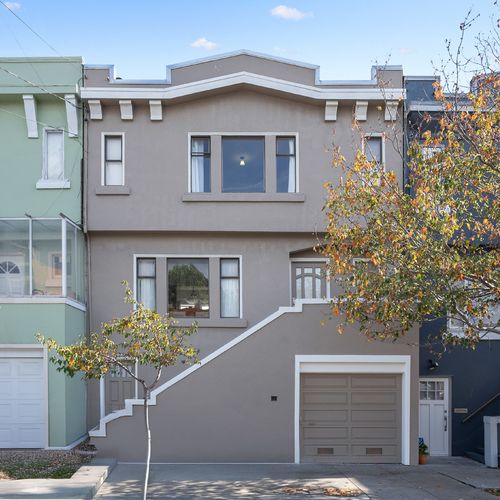
Selling a Property in the Inner Mission District of San Francisco in 2026
Selling in the Inner Mission is different than selling almost anywhere else in San Francisco.
Buyers here are not only comparing finishes and floor plans. They’re comparing how the home will feel on a Tuesday morning, how quiet the bedroom is at night, whether the outdoor space is truly usable, and how livable the parking situation will be when friends swing by for dinner.
In 2026, that lifestyle-driven decision-making is meeting a buyer pool that feels more active and more prepared. More buyers are showing up pre-approved. Relocation buyers are back in the mix. And the best properties are still creating competition when they’re positioned correctly.
That last part matters. In the Inner Mission, strong outcomes are rarely accidental. Your most consistent formula is simple:
Prep + Strategy (marketing) + Full disclosure package.
When those three are dialed in, buyers stop looking for reasons to hesitate and start competing.
For this guide, “Inner Mission” means the boundaries you use with clients:
16th Street to Cesar Chavez, and Valencia Street to Potrero Avenue.
Key takeaways
- Single-family homes, condos, and TICs need different pricing strategies. Many houses can benefit from strategic underpricing to create competition, while condos typically need tighter, data-driven pricing because they often sell near asking or below unless the unit is truly differentiated.
- There’s a real pricing exception at the higher end. In the roughly $3.5M to $5M+ tier, the strategy often shifts to precision pricing, and these homes frequently sell closer to asking.
- Inner Mission prep is about confidence, not cosmetics. Paint, lighting, floors, staging, landscaping, and targeted repairs matter because they reduce perceived risk and make the home feel turnkey.
- Disclosures are leverage in San Francisco. A complete, organized package (including a 3R report, permit history, and HOA docs where applicable) helps buyers write cleaner, stronger offers.
- Two timing mistakes cost sellers the most: listing right before a long holiday, and overpricing.
What “Inner Mission” means here, and why it matters
When a buyer says they want “the Mission,” the next question is always “Which part?”
For this article, we’re talking about the Inner Mission specifically:
16th to Cesar Chavez and Valencia to Potrero.
That rectangle has its own rhythm. It’s walkable, energetic, food-forward, close to key transit corridors, and packed with classic San Francisco housing stock. It’s also urban. Buyers expect that. What they don’t want is uncertainty.
Here’s what buyers in this area evaluate fast:
- Noise patterns (street exposure, late-night activity, weekend energy)
- Parking and storage
- Indoor-outdoor usability
- Layout practicality (especially for couples, families, and work-from-home setups)
- How the block feels at different times of day
That’s why your best outcomes come from a strategy that doesn’t just “list a home,” but deliberately positions it for the right buyer pool.
Pricing in 2026: three playbooks (and one big exception)
Most Inner Mission pricing mistakes happen for one of two reasons:
- Sellers use the wrong strategy for the property type, or
- Sellers ignore how different the buyer pool behaves at different price tiers.
Playbook 1: Single-family homes (most of the market)
Price to create competition when the product supports it
For many Inner Mission single-family homes, strategic underpricing is still one of the most effective ways to produce a strong result, but only when the home is fully prepped and the launch feels intentional.
Your real-world range is honest and useful: 20% to 40% under depending on micro-location, layout, upgrades, and overall livability.
That does not mean “throw out a low number and hope.” It means you’re doing three things on purpose:
1) Widening the buyer pool
You’re inviting in buyers who are watching a specific band and can stretch if they fall in love.
2) Concentrating demand into a short window
The Inner Mission is a momentum neighborhood. When the first week is strong, it changes the tone of the entire sale.
3) Reducing uncertainty
This is where your full disclosure package does real work. Buyers write their strongest terms when they feel safe.
When this strategy usually works best
- The home has at least two meaningful “premiums”: parking, real outdoor space, exceptional light, a rare layout, or upgrades that make it feel turnkey.
- The block and micro-location support the lifestyle story.
- The home presents as easy to live in on day one.
The big exception: $3.5M to $5M+ homes often need a different approach
Price with precision, and expect closer-to-ask outcomes
At the higher end, the buyer pool is smaller and more selective. These buyers are less impressed by “a deal” and more focused on value, fit, and quality. In your experience, homes in the $3.5M to $5M+ tier often sell around the asking price when priced correctly and positioned well.
In that segment, aggressive underpricing can backfire by:
- attracting the wrong buyer profile,
- creating skepticism about what’s “off,” or
- missing the buyer who wants clarity and precision.
The strategy shift at the high end
- Price closer to market value based on the best comps and the premium features that truly matter in the Inner Mission.
- Let prep and story-driven marketing create urgency, rather than relying on a huge underprice gap.
Playbook 2: Condos
Price closer to recent market data
Condos behave differently in San Francisco. Even when buyer activity improves, condo buyers tend to compare more options and negotiate harder. In practice, many condos trade near asking or below unless they’re truly differentiated.
What buyers weigh heavily:
- Parking and storage
- Outdoor space
- Elevator vs walk-up
- HOA health, especially reserves and planned projects
- How “turnkey” the unit feels
If your condo has clear advantages, you can still create urgency. But for most condos, pricing needs to track the most recent, most comparable data.
Playbook 3: TICs
Sell clarity, not just charm
TIC buyers can love architecture and location, but they also want the structure to feel understandable. TICs tend to sell best when the home is easy to imagine living in and the paperwork feels organized and straightforward.
In 2026, you win TIC buyers by doing what you already do:
- prepare aggressively,
- disclose thoroughly,
- and remove the “unknowns” that make buyers hesitate.
Prep in the Inner Mission: the checklist that changes buyer behavior
In this neighborhood, prep is not about perfection. It’s about eliminating reasons for hesitation.
Buyers can tolerate “older.” They can even tolerate “quirky.” What they struggle with is “unclear” and “risky.”
Start with inspections and tackle the confidence killers
Your best sellers do this early because it changes everything that follows.
- Order inspections
- Get bids for major items
- Fix what makes sense
- Document what you don’t fix so buyers can underwrite it
A simple rule that holds up in San Francisco:
If buyers can quantify it, they can underwrite it. If they can’t, they discount the home.
Your always-worth-it prep stack
These are the improvements you consistently lean on because they show up immediately in buyer perception:
- Paint
- Lighting
- Floors
- Staging
- Landscaping
- Deep clean
- Kitchen improvements when possible
- Bathroom improvements when possible
- Fix major issues when possible from Home and Pest reports
This set is strong because it impacts what buyers feel in the first five minutes. In the Inner Mission, that first impression is everything.
What Inner Mission buyers notice in the first five minutes
If you want to understand why paint and lighting still matter so much, it’s because buyers are reading the home fast:
- Does it feel bright or dim?
- Does it feel clean or “tired”?
- Does the layout make sense immediately?
- Is the living space inviting, or does it feel like work?
- Does the outdoor space feel usable?
- Do they feel calm inside, even though the neighborhood is lively?
Prep is how you control those answers.
Noise and parking: how to address them without making them the headline
This is where sellers either say nothing and hope buyers don’t notice, or overtalk it and accidentally make it bigger than it needs to be.
The best approach is calm and practical.
Noise strategy
- Highlight factual livability strengths: bedroom separation, upgraded windows, interior calm, privacy, and light.
- Use “quiet retreat” language without sounding defensive.
- Let the home show well when it naturally shines.
Parking strategy
- If you have parking, treat it like a premium feature and show it clearly.
- If you don’t, provide real context and options without apologizing. Most Inner Mission buyers understand the tradeoff. They just want clarity.
Where Compass Concierge fits
One of the biggest reasons sellers delay or under-prep is cost. Compass Concierge is built to remove that barrier by allowing certain prep services to be paid upfront, with repayment typically due at closing (subject to program terms, eligibility, and timing rules).
This matters in the Inner Mission because the right prep list often includes paint, floors, staging, landscaping, cleaning, and targeted improvements that materially change how the home presents.
Learn more here:
- Learn More about Compass Concierge: https://www.compass.com/concierge/nick-guzman/
Marketing in 2026: sell the Inner Mission story, then control the rollout
You said it best: marketing is storytelling plus social media, plus a little bit of everything. The key is making that “little bit of everything” feel coordinated, not scattered.
The story angles that consistently win in the Inner Mission
These are the angles you see convert, and they match how Inner Mission buyers decide:
- Turnkey renovation
- Indoor-outdoor living
- Parking
- Family-friendly layout
- Quiet retreat feel
The best campaigns usually choose one primary angle and one supporting angle, then build everything around it:
- photos and video
- listing copy
- social content
- property website or brochure
- showing experience and first-week momentum
Emphasize the 3-Phased Marketing Strategy
You also made a smart call: keep the exact “day-by-day” cadence as something sellers learn in consultation, not something you spell out in a public blog post.
What you can highlight clearly is the framework:
a modern rollout that builds momentum before going fully public.
The three phases are:
- Private Exclusives
- Coming Soon
- Go Live everywhere
This approach gives you more control over timing, presentation, and momentum. It also pairs perfectly with your prep-first and disclosure-forward process.
To learn more about how you run this for sellers:
- Learn More about our selling process: https://nicholasguzmanestates.com/sellers/
Disclosures that win in 2026: build trust and keep offers clean
In the Inner Mission, disclosures are not paperwork. They are leverage.
A clean, complete disclosure package helps buyers write stronger offers because it reduces the two things that kill deals quietly:
- uncertainty, and
- fear of hidden costs.
Your SF disclosure essentials
Your “full disclosure package” includes:
- Home and pest reports (and specialty reports as needed)
- 3R report
- Permit history
- Supporting documentation where available
This matters in San Francisco because buyers want to understand what was done, when it was done, and whether the record supports it.
Condo and TIC disclosure essentials
For condos and TICs, this is where deals can wobble if the package is incomplete or messy. You prioritize:
- HOA budget and financials
- Reserve study
- Meeting minutes
- Insurance
- Planned projects
- Special assessments and reserves documentation
Your two biggest confidence killers are:
- Special assessments
- Weak HOA reserves
Those don’t automatically kill a deal, but they can make buyers nervous if they don’t understand the plan. The fix is straightforward: lead with organization and clarity.
Tenant history paperwork (keep it calm and organized)
In the Inner Mission, tenant history paperwork can make buyers nervous because they don’t know how to interpret it.
The best approach is exactly what you already do:
- include it,
- label it clearly,
- and provide a simple summary so it feels understandable, not ominous.
Timing your Inner Mission sale in 2026: the two mistakes to avoid
Sellers love to ask about timing. In practice, the biggest timing wins come from avoiding the mistakes that dilute momentum.
Mistake 1: Going live right before a long holiday
Holiday weeks dilute attention. They fracture showings. They reduce the “first weekend energy” that matters so much in a momentum neighborhood.
If you’re near a long holiday, use that time for prep, disclosures, and media, then launch when buyers are back in routine.
Mistake 2: Overpricing
Overpricing is not just a pricing issue. It’s a momentum issue. It can cause your listing to miss the most motivated buyer wave in the first week, which is when you want urgency and clean terms.
Even at the high end, where homes can sell closer to asking, the same principle applies: pricing must feel credible and supported by value.
Case study snapshot: 2849 Bryant St (Inner Mission results when the strategy is dialed)
A lot of sellers assume big results happen because “the market got hot.”
In reality, the best outcomes are engineered.
2849 Bryant St was listed at $1,295,000 and sold for $1,875,000 with 6 offers.
That result aligns with the repeatable stack you’re using in 2026:
- prep that removes hesitation,
- marketing that tells the right story,
- and a disclosure package that lets buyers write strong terms confidently.
Read the full breakdown here:
The 2026 Inner Mission Seller Roadmap (step-by-step checklist)
Step 1: Identify your lane
- Property type: Single-family / Condo / TIC
- Price tier: core market or $3.5M to $5M+
- Premium value levers: parking, outdoor space, turnkey renovation, quiet retreat, family-friendly layout
- Potential friction: noise exposure, tenant history paperwork, HOA reserves or assessments
Step 2: Build your prep plan and decide how to fund it
- Paint, lighting, floors
- Deep clean + landscaping
- Staging
- Kitchen and bath improvements when possible
- Fix major issues from Home and Pest when it makes sense
If you want to explore paying certain prep costs upfront through Compass (subject to program terms):
- Learn More about Compass Concierge: https://www.compass.com/concierge/nick-guzman/
Step 3: Inspect early and fix what matters most
- Order Home and Pest early
- Get bids and make a repair plan
- Fix major confidence killers when possible
- Document what you don’t fix so buyers can underwrite it
Step 4: Assemble the full disclosure package
- Inspections
- 3R report
- Permit history and supporting docs
For condos and TICs:
- Budget, reserve study, minutes, insurance, planned projects, assessments, reserves
Step 5: Choose the pricing strategy that fits your lane
- Single-family (core market): often strategic underpricing to create competition
- Single-family ($3.5M to $5M+): precision pricing, often closer to asking
- Condos: comp-driven pricing, often near ask or below unless differentiated
- TICs: clarity wins, documentation and livability carry value
Step 6: Choose your story angle
Pick 1 to 2:
- turnkey renovation
- indoor-outdoor living
- parking
- family-friendly layout
- quiet retreat
Step 7: Use the 3-Phased Marketing Strategy
Highlight the framework publicly, and save the exact cadence for consultation:
- Private Exclusives
- Coming Soon
- Go Live everywhere
Learn more here:
- Learn More about our selling process: https://nicholasguzmanestates.com/sellers/
Step 8: Get a valuation and a customized plan
- Request a Home Valuation: https://nicholasguzmanestates.com/contact/
- See what your current value is: https://nicholasguzmanestates.com/home-valuation/
FAQs
1) Should I sell my Inner Mission home with tenants in place, or deliver it vacant?
It depends on property type and buyer profile. For many single-family homes, the broadest demand often comes from a clean move-in path. For condos and TICs, tenant history is not automatically a negative, but it can increase buyer diligence. The key is presenting everything clearly so buyers understand what they’re evaluating.
2) What if my 3R report or permit history shows work buyers will question?
That’s common in San Francisco. The goal is not to hide it. The goal is to organize it. If permits were pulled and finalized, provide that documentation. If something is unclear, include what you know and supporting context like invoices and timelines so buyers aren’t left guessing.
3) I’m worried about Inner Mission noise. How do I address it without making it a bigger issue?
Focus on livability, not defensiveness. Highlight factual positives like bedroom separation, upgraded windows, and an interior that feels calm. Let the home show well at the times it naturally presents best. Buyers expect city energy. They just want to know the home still feels comfortable.
4) How do special assessments and weak HOA reserves affect a condo or TIC sale?
They don’t automatically stop a sale, but they can affect buyer confidence and sometimes financing comfort. A clean HOA package plus a simple summary up front can reduce nervousness and keep offers cleaner.
5) What’s the fastest way to get a custom plan for my Inner Mission property?
Use whichever path fits your needs:
- Learn More about our selling process: https://nicholasguzmanestates.com/sellers/
- Request a Home Valuation: https://nicholasguzmanestates.com/contact/
- See what your current value is: https://nicholasguzmanestates.com/home-valuation/
- Case Study: https://nicholasguzmanestates.com/case-study-how-2849-bryant-st-in-san-franciscos-inner-mission-jumped-from-1295000-to-1875000-in-2-weeks/
- Learn More about Compass Concierge: https://www.compass.com/concierge/nick-guzman/
Check out this article next