San Francisco Condo Buyer’s Market: How I Got My Client $160,000 Under List at Clocktower Lofts
Introduction
If you have been watching the San Francisco condo and loft market, you have probably felt the mixed signals.
Some listings sit. Price cuts happen. Negotiation is back in play. At the same time, the right condo in the right pocket can still move quickly, especially if it has the layout, the light, the parking, and the lifestyle feel buyers want.
This is why I like case studies. They show what is actually possible in real life, not just in theory.
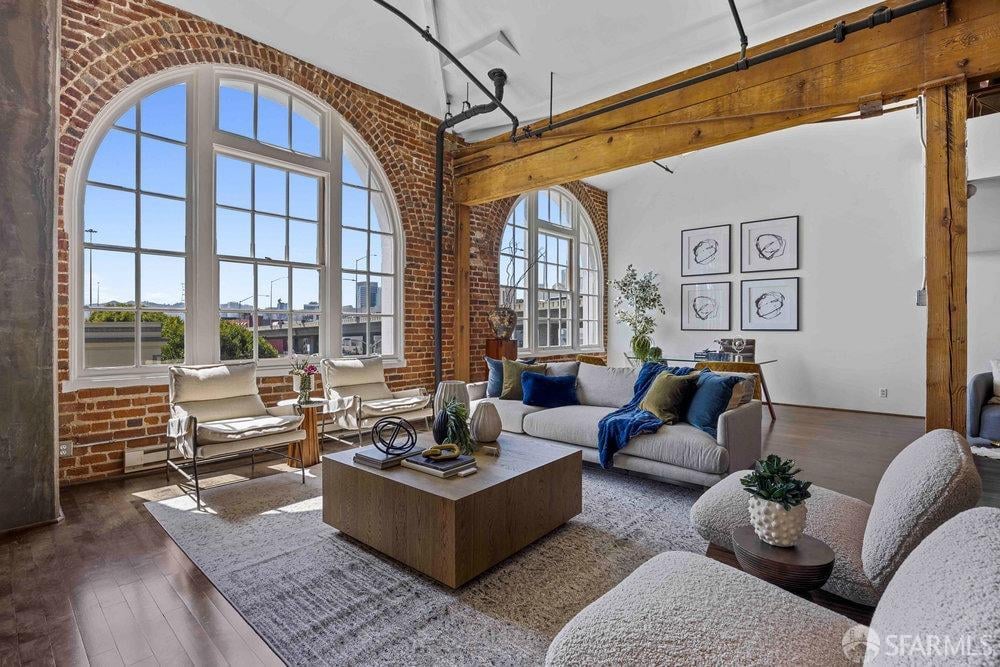
In this post, I’m breaking down a recent purchase I negotiated for clients at The Clocktower Lofts: 461 2nd St, Unit 302C, San Francisco, CA 94107. This was a loft-style condo with high ceilings, true loft character, one parking space, and access to a rooftop deck. My clients loved the area and the loft feel. Their biggest concern was not competing with other buyers. It was overpaying, and avoiding surprises in the HOA like special assessments.
A quick snapshot of the win (bonus snippet)
I helped my buyers purchase a loft condo at The Clocktower Lofts in San Francisco for $1,140,000, which was $160,000 under the original list price and $60,000 under the reduced price. We won with clean terms (loan + appraisal contingency only), full HOA diligence, and a 19-day close.
The bigger point is this: there are still deals in San Francisco condos and lofts, but they usually don’t happen by accident. They happen when you understand the listing history, evaluate seller motivation, and build an offer strategy that is both confident and realistic.
Key takeaways
- The best negotiation opportunities often come from listings with history. Withdrawn, expired, relisted, reduced, or simply sitting longer can create leverage.
- Days on market changes seller psychology. A brand-new listing is usually less flexible than one that has already tested the market.
- Clean terms can buy you price. Certainty matters, especially when a seller has already been through months of no offers.
- For condos, the building matters as much as the unit. HOA reserves, litigation, projects, and special assessment risk all affect value and financing.
- San Francisco can shift quickly. The negotiation window can close faster than buyers expect once demand picks up again.
The property: what made it a great fit for my buyers
My clients were clear about what they wanted:
- Location and lifestyle first
- Real loft feel with high ceilings
- A purchase that felt smart and defensible, not emotional
- Confidence around HOA health, specifically avoiding special assessments and major surprises
This unit checked important boxes:
- Loft-style layout and volume
- One parking space
- Rooftop deck
- No storage, which is common in some buildings and something we accounted for in the overall value conversation
A quick note for buyers reading this: a condo purchase is never just the unit. You’re also buying into the HOA, the building’s finances, and the building’s long-term maintenance plan. That’s why the diligence process matters so much in San Francisco.
The listing history: why this was negotiable
Here’s the timeline that created leverage. This is the kind of pattern buyers should learn to recognize, because it often signals a seller who is moving from “testing the market” to “ready to make a deal.”
Listing history (as recorded)
- Apr 11, 2025: Listed at $1,299,000
- Jul 10, 2025: Withdrawn at $1,299,000
- Sep 5, 2025: Listed again at $1,299,000
- Oct 1, 2025: Price reduced to $1,199,000
- Nov 24, 2025: Expired at $1,199,000
- Dec 15, 2025: Pending
- Dec 23, 2025: Sold at $1,140,000
Why the history mattered
When a condo is listed multiple times, withdrawn, expires, and then reduces, it creates what I call “market fatigue.”
Even if the unit is great, the market starts asking questions:
- Why didn’t it sell?
- Is it overpriced?
- Are there building issues?
- Is the seller unrealistic?
- Are there better alternatives at the same price?
Sometimes the answer is simple: the seller’s pricing expectations are not aligned with what buyers are willing to pay in that moment.
In this case, the seller purchased the property back in 2013 for $1,130,000. It’s common for sellers in that position to start with a price that feels like “break even plus a little” or “we should be able to get at least X.” But the market decides what is realistic, not the seller’s original plan.
Once a property has been exposed to the market multiple times with no success, the seller is often more open to real offers, especially when the offer feels like it will actually close.
Our offer strategy: how we got to $1,140,000
This is where buyers often want a simple formula. The truth is what I told my clients: every building is different, and condo pricing isn’t just about square footage. HOA details, building reserves, and buyer perception can shift value in a big way.
That said, there is a repeatable structure I use.
Step 1: Build a defensible value range
To figure out how aggressive we can be, I look at a combination of:
- Recent comparable sales, ideally in the building or truly similar loft inventory nearby
- Price per square foot as a reference point, not a final answer
- Unit condition (what’s updated, what’s dated, what might need attention soon)
- HOA dues relative to similar buildings and what they include
- Building health (reserves, litigation, upcoming projects)
- Days on market and listing history (withdrawn, expired, reduced)
I’m not trying to guess the seller’s number. I’m trying to identify a number my buyer can feel good about five years from now.
Step 2: Start with an offer that is real, not random
We offered $1,130,000.
This was not a “throw it at the wall” offer. It was grounded in the listing’s history and our belief that the reduced price still hadn’t triggered demand. The unit had been sitting close to 30 days at the reduced number. That matters.
When a price reduction happens and the home still sits, the market is signaling something: either the new price still isn’t compelling enough, or buyers still feel uncertain.
Step 3: Negotiate with discipline
The seller countered higher.
We did not jump dramatically. We countered their counter by $10,000, landing at $1,140,000.
That small move matters more than most buyers realize. It signals:
- We are serious and we want the home
- We’re willing to move
- We are not going to chase you back to an unrealistic number
The end result:
- $1,140,000 purchase price
- $160,000 under the original list price
- $60,000 under the reduced price
Why clean terms helped us get the discount
Sellers don’t just accept a price. They accept a set of risks.
They’re thinking:
- Will this buyer close?
- Will the loan fall apart?
- Will the appraisal come in low?
- Will the buyer renegotiate after inspections?
- Will this deal drag out and end up back on market?
For a seller who has already been through multiple listing attempts, certainty becomes extremely valuable.
The terms we used
- 19-day close of escrow
- No inspection contingency
- Loan contingency
- Appraisal contingency
A lot of sellers are willing to accept a lower number when the offer is clean and they believe you will close without drama.
Also, removing the inspection contingency helps eliminate the classic “second negotiation,” where buyers come back after inspections asking for credits or repairs. This is one of the most common reasons sellers prefer one offer over another.
How we waived the inspection contingency responsibly
Waiving an inspection contingency should never mean waiving diligence.
Here’s my rule, and it’s simple:
- If there is no home inspection report, we do not remove the inspection contingency.
- We will order our own inspection. For most condos, it typically ranges from about $300 to $500, and it’s worth it.
In this case, we waived the inspection contingency because:
- There was already a home inspection report in place
- We reviewed it carefully
- We understood the defects and anticipated items
- We paired that with full HOA document review
This isn’t about taking risks. It’s about removing uncertainty that the seller is worried about, but only after you’ve done the homework.
The HOA diligence checklist I use for San Francisco condos and lofts
In SF, HOA review is not a formality. It’s part of the decision.
If you want to buy with confidence, you want clarity in these areas:
1) Reserves and reserve study
- How much money is in reserves?
- Is there a current reserve study?
- Is the HOA funding reserves appropriately?
Thin reserves don’t always mean “bad.” But they can mean higher risk of assessments and deferred maintenance.
2) Management quality
- Is the HOA professionally managed?
- Are budgets consistent and reasonable?
- Does the HOA respond and handle maintenance proactively?
A well-managed HOA can make a huge difference in quality of life and long-term value.
3) Litigation
- Is there active litigation?
- If yes, what is it related to and could it impact financing?
Some lenders get cautious around litigation. It can shrink the buyer pool and affect resale demand later.
4) Upcoming projects and deferred maintenance
- Roof, elevators, exterior work, major systems
- What is planned, what is being discussed, and what is being postponed?
5) Special assessments, current and anticipated
- Any prior special assessments?
- Any current assessments?
- Any anticipated assessments being discussed?
This is one of the biggest fears condo buyers have, and it’s a smart thing to evaluate up front.
How to find similar “under list” opportunities in San Francisco condos and lofts
If you want a deal, you have to shop where deals are most likely to exist.
Here are the patterns I look for with buyers.
1) Look for listings with history
Start your search with properties that have:
- Price reductions
- Relists (especially same photos and same description)
- Withdrawn listings that came back
- Expired listings that returned to market
- Longer days on market than comparable listings nearby
This history often signals a seller who is moving toward a more realistic outcome.
2) Pay attention to days on market
New listings are often less negotiable.
A brand-new condo listing (especially under 7 days) usually means:
- The seller is testing the market
- They want to see traffic first
- They’re less open to discounts early on
As time passes, leverage tends to improve. The market gives feedback. Showings slow. The seller starts recalibrating expectations.
3) Use competition, not just comps
Comparable sales show what happened in the past. Competition shows what buyers are choosing right now.
Ask:
- What else is available today in the same price band?
- Are there multiple similar condos sitting?
- Are buyers ignoring a listing because of HOA dues, layout, or condition?
If there’s a cluster of similar inventory sitting, buyers often have more leverage.
4) Build the offer around certainty
If you want a seller to accept a lower number, your offer has to feel safe.
Certainty levers include:
- A realistic close timeline
- Strong lender readiness
- Clear, simple contingencies
- Diligence completed up front where possible
A seller who has already been through a long listing journey often values certainty more than squeezing every last dollar.
How I “test” seller motivation when the listing agent won’t say much
Buyers ask all the time: “Are they motivated?”
Sometimes listing agents will tell you. Sometimes they won’t.
Even when they do, I treat it as a clue, not a guarantee.
My approach is straightforward: put a credible offer in front of them and see how they respond.
If the listing agent is vague, it doesn’t mean the seller isn’t motivated. It just means you don’t get the story for free.
The seller’s response tells you what you need to know:
- How fast they respond
- Whether they counter in a realistic range
- Whether they engage or stall
- Whether they request clean terms or a quick close
- Whether their counter feels emotional or businesslike
In this case, the seller engaged and ultimately accepted a number under the reduced price. That’s the definition of a seller who was ready to make something happen.
When you should NOT negotiate hard (even in a buyer’s market)
Negotiation is a tool. It’s not always the right tool.
Here are the situations where I advise buyers to be careful.
1) It’s brand new on the market (especially under 7 days)
Most sellers are least flexible right away. They want to see activity first.
Unless the listing agent discloses something that changes the urgency, I often prefer to watch for a couple weeks and let the market give us more information.
2) It’s priced right based on comps
Not every condo is overpriced just because it’s a slower market.
If the comparable sales support the list price, and the unit is positioned well, a highly aggressive offer can backfire.
3) It’s priced clearly under the baseline
When a condo is priced noticeably below similar units, it can be:
- A deliberate underpricing strategy to drive demand
- A signal there’s a known issue you’ll see in disclosures
- A seller prioritizing speed, expecting a strong response
In those cases, a big discount attempt can be the wrong play.
4) It has rare SF premium factors
Some condos still move fast when they have rare features and are priced right:
- Golden Gate Bridge or Bay Bridge views
- Exceptional light and layout
- A standout location in a highly desired micro-pocket
- A true one-of-one loft feel
It’s not the majority, but it happens. When that’s the case, the strategy is often to be decisive rather than overly aggressive.
FYI before you use this strategy
- Every building is different. What worked here was supported by the listing history and a diligence path that reduced risk.
- Waiving an inspection contingency is not a default move. It only makes sense when you have a solid inspection report and have reviewed it carefully.
- HOA review is essential in San Francisco. Reserves, litigation, upcoming projects, and special assessments matter.
- A good deal is not just a low price. It’s a price that makes sense given the unit, the building, and the current market options.
- Markets shift fast here. If you’re waiting for perfect timing, you may miss the window where negotiation is easiest.
Call to action (links)
If you’re shopping for a San Francisco condo or loft and you want a strategy built around days on market, seller motivation, HOA diligence, and clean terms, I’m happy to help.
Learn the buying process:
https://nicholasguzmanestates.com/buyers/
Run numbers with a mortgage calculator:
https://nicholasguzmanestates.com/mortgage-calculator/
Explore different communities:
https://nicholasguzmanestates.com/explore-communities/
Contact me to get a list of current opportunities:
https://nicholasguzmanestates.com/contact/
FAQs
1) How far under list price can I realistically offer on an SF condo or loft?
It depends on the listing’s history. The biggest negotiation wins usually come from properties with longer days on market, prior reductions, relists, or an expired or withdrawn history. A brand-new listing priced correctly is usually less flexible.
2) What’s the fastest way to tell if a condo listing is overpriced?
Look at recent comparable sales and current competition, then compare the unit’s condition, HOA dues, and building reputation. If it’s sitting while similar units are moving, price is often part of the story.
3) Should I ever waive an inspection contingency on a condo?
Only if your diligence supports it. If there is a reliable inspection report already available and you’ve reviewed it carefully, it can make your offer stronger. If there’s no report, it’s usually smarter to keep the inspection contingency and order your own.
4) What HOA red flags should I pay attention to before I write an offer?
Reserves that feel thin, unclear or outdated reserve studies, active litigation, major upcoming projects without a clear plan, and any indications of current or anticipated special assessments.
5) If I’m currently renting, how do I know if buying a condo makes sense right now?
Start by comparing monthly rent to realistic ownership costs (mortgage, taxes, HOA, insurance). If you can lock in a home you actually want at a price you feel good about, you may be putting that monthly payment into your own asset instead of paying rent, especially if you plan to stay long enough to justify transaction costs.
Check out this article next