SF Condo Market Opportunity: How We Negotiated a Real Deal (Case Study Inside)
San Francisco condo buyers are heading into 2026 asking the same thing in different ways: Is there still real opportunity, or am I about to overpay and regret it?
The answer is yes, there are opportunities. But they are not evenly spread across the market anymore.
Today’s SF condo market rewards buyers who do three things well:
- Target the right buildings.
- Spot leverage early in the listing history.
- Write an offer that feels clean, certain, and easy to close.
That is the lane we are in right now. The frenzy has cooled, demand is still there, and that combination creates a more balanced path for buyers who move with precision.
Below is a December 2025 SF condo snapshot, what it signals for 2026, and a quick case study from a South Beach deal where we negotiated meaningful value without getting reckless.
Key takeaways
- SF condos are not one market. A-tier buildings can trade efficiently, while everything else is where negotiation lives.
- Leverage is back, but it is pocketed. Longer days on market, price improvements, and seller fatigue create real openings.
- Building fundamentals matter more than ever. Strong reserves, no litigation, and competent HOA management are central to value in 2026.
- Certainty is a negotiation tool. Clean terms and fast execution can matter as much as price when a seller is tired.
- If you are relocating or deciding whether to rent or buy, 2026 is a strategy year. The best outcomes come from careful underwriting and selective action, not guesswork.
SF Condo Market Report: December 2025 snapshot
The December numbers show a market that is functioning, but selective. Closings are happening. Good units still move. But pricing power is concentrated, and that is where buyers can win when they focus on the right targets.
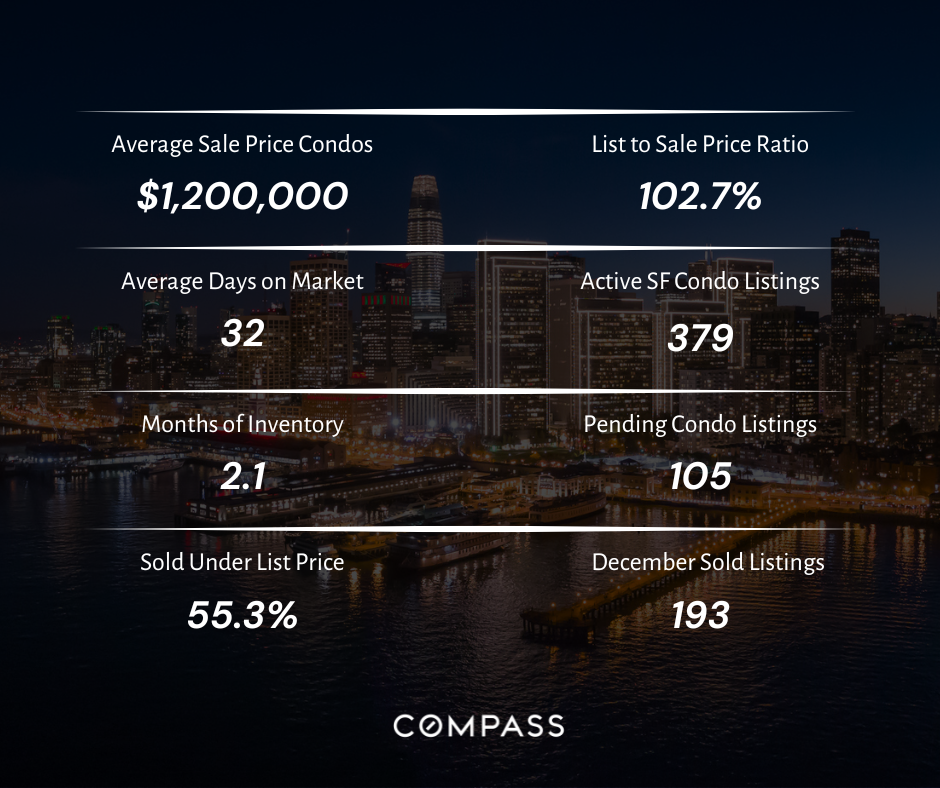
Here are the key metrics from December 2025, plus the real-world interpretation.
Average condo sale price: $1,200,000
This is a useful anchor, but it does not mean “the average condo” is what you should buy.
In SF, the quality spread between buildings is massive. That spread has widened in the last few years. A well-run building with strong fundamentals can hold value and trade efficiently. A building with weaker reserves, litigation, or messy management can sit even if the unit looks great online.
List-to-sale price ratio: 102.7%
At first glance, this makes people assume the market is competitive across the board.
What it really signals is a split market:
- Some listings are priced correctly (or intentionally low) and get pushed above ask.
- Plenty of others sit, get improved, and become negotiable.
That is why buyers who only chase “hot” listings feel like everything is expensive, while buyers who focus on the right leverage signals can still negotiate meaningful value.
Average days on market: 32
Thirty-two days is not a frozen market. It is a market where buyers have enough time to be selective, but not so much time that good opportunities last forever.
This is also where the nuance matters: the average is not as helpful as the outliers. When a listing is meaningfully above the norm for its neighborhood and building tier, that is often where the opportunity starts.
Active listings: 379
Pending listings: 105
Sold listings: 193
Months of inventory: 2.1
A 2.1 months of inventory environment is not flooded. Demand is still real.
So why do deals exist? Because the inventory is not evenly distributed.
Some buildings are magnets. Others have friction. Some floor plans are easy. Some are “almost.” And in today’s SF condo market, “almost” is where negotiation and value capture often live.
Sold under list: 55.3%
If you are a buyer wondering whether there is still opportunity, this is the stat that should calm you down.
More than half of condos sold under list in December. That is not a market where sellers hold every card. It is a market where:
- Price-improved listings become openings.
- Longer days on market can shift power.
- Certainty and clean execution can beat a higher, shakier offer.
- Negotiation is a skill again.
What’s next for SF’s condo market in 2026
The latest SF condo outlook suggests 2026 will be a year of strategy and selective opportunity for buyers and sellers.
Well-positioned, A-tier buildings can still trade efficiently. But the market is rewarding pricing discipline and clean execution, especially where leverage shows up:
- longer exposure
- prior price adjustments
- building or layout friction
The frenzy is not what it was, but demand remains. That creates a more balanced lane for buyers who move with precision.
What’s catching eyes right now
1) Leverage is back in specific pockets
Leverage usually shows up in the listing history, not the listing description.
Signals I watch closely:
- Days on market meaningfully above the neighborhood norm
- Price improvements, especially when the first number was clearly aspirational
- Listings that feel “stale” in otherwise good buildings
- Motivated seller timelines where certainty becomes valuable
- Units with a marketable friction point (layout, light, floor, parking, dues optics) that narrows the buyer pool
When a listing has meaningful exposure time, the seller’s mindset often changes. The longer it sits, the more likely the seller is to prioritize relief and certainty, not just a headline price.
2) Building fundamentals matter more than ever
In 2026, you are not just buying a condo. You are buying an HOA balance sheet and a building’s future maintenance path.
My top three screens are simple:
- Strong reserves
- No litigation
- HOA management that is competent and responsive
These three items reduce surprise risk, help with financing and resale, and tend to separate “A-tier” buildings from the rest.
3) A-tier condos are separating from everything else
This is one of the clearest themes heading into 2026.
Premium, well-managed buildings in strong locations tend to trade more efficiently and hold value better. Everything else is where negotiation lives.
That does not mean “everything else” is bad. It means the market is less forgiving, and buyers are more discerning about:
- dues relative to reserves
- upcoming capital needs
- document quality and transparency
- management responsiveness
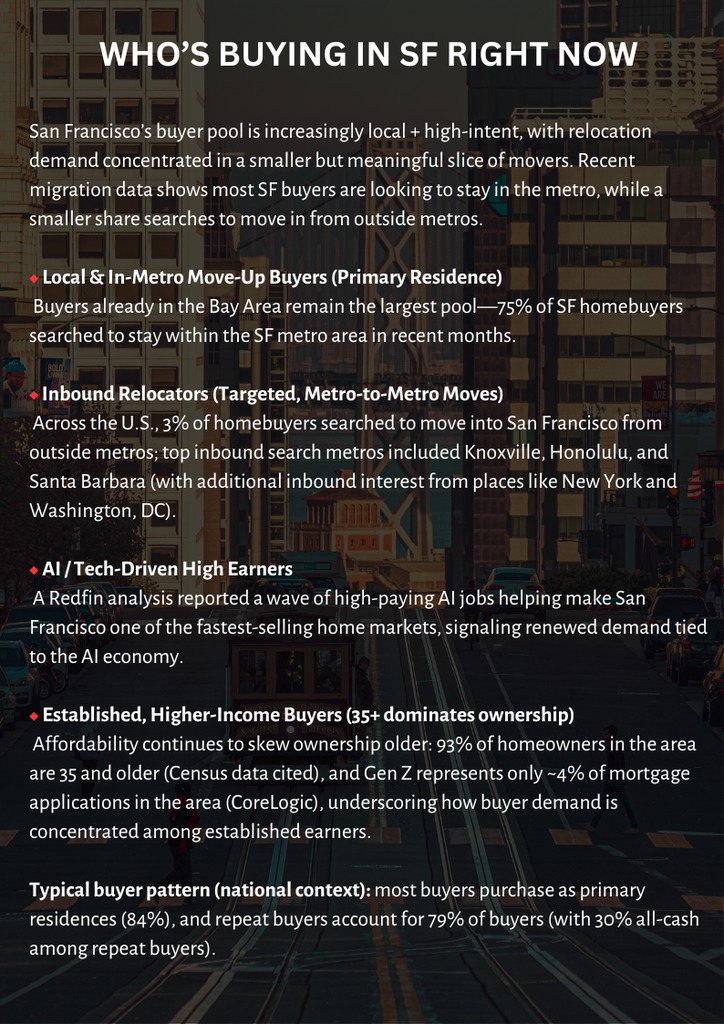
Why buyer demand still matters: the AI leasing signal in SF
One thing I keep an eye on is what is happening on the job and capital side of San Francisco, because that supports housing demand over time.
SF’s office market has started to show a real AI-driven demand signal again, especially in Mission Bay and SoMa. A recent example: reporting indicates OpenAI has been in talks to sublease a large block of space at 1800 Owens in Mission Bay, potentially adding hundreds of thousands of square feet to its local footprint. (San Francisco Chronicle)
Why this matters for condo buyers:
- When major employers expand locally, it can strengthen confidence.
- Capital concentration and job growth tend to support demand in prime neighborhoods over time.
- The impact is not immediate and it is not uniform, but it is a real tailwind for well-located condos with strong building fundamentals. (San Francisco Chronicle)
What I’m watching next is continued AI leasing in Mission Bay and SoMa, and whether that creates more urgency for condos near the strongest job hubs, especially in buildings that meet the fundamentals test.
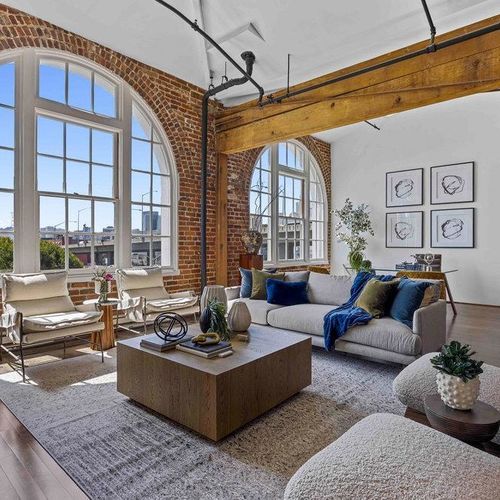
Case study spotlight: 461 2nd St #302C (South Beach)
To show what “opportunity” actually looks like today, here is a quick snapshot from a recent South Beach deal.
The leverage was straightforward. The listing had been sitting around 80 days, and it felt overpriced relative to what the market was rewarding. That is often the setup where buyers can negotiate value, as long as the offer is structured to feel certain and easy to close.
Pricing history
- Original list: $1,299,000
- Price improved: $1,199,000
Negotiation path
- $1,130,000 → $1,175,000 → won at $1,140,000
Winning terms
- No inspection contingency (comfortable based on the seller’s inspection and disclosure package)
- 7-day appraisal
- 12-day loan
- 19-day close
The takeaway is simple: there are opportunities like this in today’s SF condo market. You just need to know where to look, how to spot leverage, and how to negotiate from a position of certainty.
Read the full case study here:
https://nicholasguzmanestates.com/san-francisco-condo-buyers-market-how-i-got-my-client-160000-under-list-at-clocktower-lofts/
A practical checklist: how to spot SF condo opportunity fast
If you are relocating to San Francisco, or you are on the fence about renting vs buying, this is the framework I use to quickly separate “worth pursuing” from “likely a pass.”
1) Listing leverage signals
- Days on market meaningfully above the local norm
- One or more price improvements
- A listing history that suggests the seller tested the top of the market and missed
- Language that signals timeline, fatigue, or preference for clean terms
- A unit that is fundamentally solid but has a narrow-buyer friction point (layout, floor, light, parking, dues optics)
2) Building fundamentals signals
This is where 2026 buyers will win or lose.
- Reserves: strong enough for the building’s age and expected capital work
- Litigation: none, or at least nothing that creates financing or resale friction
- HOA management: responsive, organized, clean reporting, clear process
- Financials that are understandable and consistent, not vague
- Dues that make sense for what you actually get
3) Offer strategy signals
This is where disciplined buyers create value.
- Structure for certainty when it makes sense (clean timelines, fewer moving parts)
- Tighten the appraisal and loan windows where possible
- Reduce seller fear of delays and renegotiation
- Stay anchored in reality and do not chase emotion
In today’s market, you can often win without “overpaying,” but you do have to move like someone who is actually going to close.
Rent vs buy in San Francisco in 2026 for relocators and fence-sitters
If you are relocating, the rent vs buy decision in SF is rarely just a spreadsheet. Most people who say “we might just rent” are really saying something else.
In your words, the most common reason is simple: fear of making a mistake.
That is fair. SF condos have more variables than a single-family home purchase in many markets because you are buying into an HOA, a building’s financial health, and long-term maintenance planning.
Here is how I think about it with clients, especially relocators.
Start with the right question, not the wrong one
The wrong question is: “Will prices go up this year?”
The right questions are:
- Do we want to be here long enough for ownership to make sense?
- Can we buy a condo in a building we would feel good owning in any market?
- Are we choosing a unit that will be easy to live in and easy to resell later?
If the building is strong and the unit checks real lifestyle boxes, you do not need perfect timing. You need a well-underwritten purchase.
The 3-part framework I use for rent vs buy decisions
1) Time horizon and lifestyle clarity
If someone is truly unsure whether they will be in SF for more than a year or two, renting can be the right call. Flexibility has value.
If the plan is to stay, build community, and settle into the city, buying can make sense even in a flat market, because you are solving a lifestyle need while building longer-term optionality.
2) Building risk versus rent simplicity
Renting is simple. You do not own the building’s future.
Buying a condo means you need to feel good about:
- reserves
- litigation status
- management competence
- dues and what they support
This is why I focus so heavily on fundamentals. If you buy into a well-run building, you reduce the “unknown unknowns” that create regret.
3) The payment conversation belongs with a lender
When a buyer is on the fence, the payment conversation is often what creates fear. Rates, cash-to-close, monthly payment, and opportunity cost are real.
I do not guess on those. I bring in a lender partner to run clean scenarios, including options like rate buydowns when applicable, and to compare “buy now” versus “rent and wait” with real numbers.
My role is to help you avoid the two big mistakes:
- buying the wrong building
- overpaying when leverage is available
The lender’s role is to model the financial side clearly so you can make a confident decision.
The good news about 2026 for fence-sitters
This is not a market that requires panic.
The December data shows closings are happening and inventory is not out of control, but more than half of sales are closing under list. That creates an environment where careful buyers can:
- take their time to underwrite properly
- target A-tier buildings
- negotiate when leverage shows up
That is a healthy setup for someone who wants to buy without feeling like they are gambling.
If you’re relocating or on the fence, here’s the next step
If you want a clear answer on whether it is smarter to rent or buy in SF right now, I’m happy to help.
Here’s what that looks like:
- A quick conversation about your timeline, neighborhoods, and non-negotiables
- A building-first screen (reserves, litigation, HOA management)
- A lender intro so you can run real rent vs buy scenarios with clean numbers
If buying is the right move, we focus on selective opportunity and clean execution. If renting is the right move, you walk away with clarity and a plan.
Resources:
Relocation Info: https://nicholasguzmanestates.com/relocation/
Buying Process: https://nicholasguzmanestates.com/buyers/
Mortgage Calculator: https://nicholasguzmanestates.com/mortgage-calculator/
Connect with me: https://nicholasguzmanestates.com/contact/
FAQs
1) What’s a realistic days-on-market threshold that signals leverage in SF condos?
If the average is around a month, I start paying closer attention when a listing is meaningfully above the local norm for its micro-market and building tier. The key is not a universal number. It’s the gap between that unit’s exposure time and what is typical for similar condos nearby.
2) What should I look for in HOA reserves if I’m not a numbers person?
You want clarity, consistency, and a reserve position that matches the building’s age and expected capital needs. If the documents are confusing, incomplete, or constantly changing, that is a signal by itself. Strong management usually presents clear financials.
3) Are price reductions always a sign of a good deal?
Not automatically. A price reduction can mean the seller is getting realistic, or it can mean there is hidden friction that buyers keep discovering. The job is to identify which one it is by reviewing documents, understanding the unit’s drawbacks, and comparing it to what is actually closing.
4) If I’m relocating, how do I avoid buying the “wrong” SF building?
Start with fundamentals before you fall in love with finishes. I would rather you buy an average unit in a well-run building than a pretty unit in a building with weak reserves, litigation, or management issues. That is where long-term regret usually comes from.
5) Does AI office growth actually affect condo prices near Mission Bay and SoMa?
It can support demand over time, especially for well-located condos in strong buildings. It does not mean every condo rises, and it does not remove negotiation from the market. Think of it as a potential tailwind for certain neighborhoods, not a guarantee for every unit. (San Francisco Chronicle)
Check out this article next