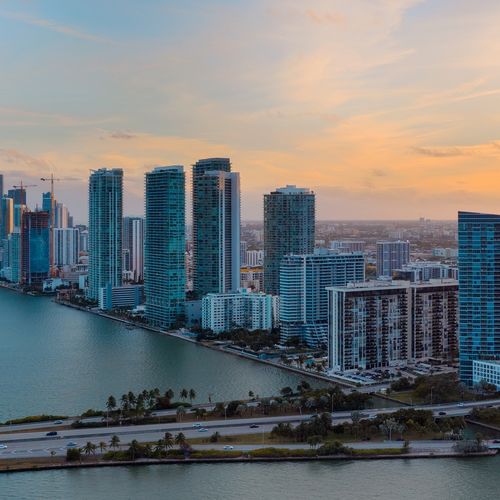
Google Expands Its Miami Office: What the Move Means for South Florida Real Estate
Miami has spent years positioning itself as a serious destination for technology companies, financial firms, entrepreneurs, and high-net-worth residents. Google's latest move suggests that effort continues to gain momentum. Alphabet, Google's parent company, signed a lease this spring to expand its Miami office at 1450 Brickell Avenue from roughly 10,000 square feet to about 45,000 square feet — more than quadrupling its footprint. Google has held space in that building since 2016. The expansion drew extra attention because it followed major residential purchases in South Florida by Google co-founders Larry Page and Sergey Brin. Their personal real estate decisions shouldn't be confused with Alphabet's corporate strategy, but together, the two stories have put a spotlight on Miami's growing pull with technology leaders, founders, and global businesses. For South Florida buyers, sellers, and investors, this is about more than the size of one office. It's another signal that established companies increasingly see Miami as a place to recruit talent, serve clients, host executives, and build a lasting regional presence. One lease won't transform every neighborhood or send property values up overnight. But when a globally recognized company makes a larger, longer-term commitment to a city, it tends to ripple outward — into business confidence, employment, housing demand, commercial leasing, and relocation activity. Here's what Google's Miami expansion could mean for South Florida, and why the state keeps pulling companies, founders, and executives away from higher-tax markets. Are you considering a move to South Florida, or thinking about buying, selling, or investing here? Reach out directly or explore our Florida Relocation Process to see how we help clients navigate exactly this kind of market shift.Key Takeaways
- Alphabet expanded Google's Miami office from about 10,000 square feet to roughly 45,000 square feet at 1450 Brickell Avenue.
- The larger office adds real credibility to Miami's push to become a major technology, finance, and professional services hub.
- Florida offers companies and relocating professionals a favorable tax environment, international connectivity, and a growing talent pool.
- Corporate expansion tends to support demand for homes, luxury condos, rentals, and Class A office space near major employment centers.
- This is a positive signal, not a guarantee — buyers and investors should still evaluate individual neighborhoods, ownership costs, insurance, and long-term fundamentals on their own merits.
What Google's Miami Expansion Actually Involves
Google has operated in Miami since 2016, but this lease represents a much bigger commitment than anything before it. Alphabet expanded its space at 1450 Brickell Avenue from about 10,000 square feet to roughly 45,000 square feet. The office is reported to primarily support Google's Latin American cloud and sales teams — and by some accounts, the company isn't yet using the full footprint, having leased extra room for future growth. Brickell puts Google in the middle of one of South Florida's most important business and residential corridors — home to financial institutions, law firms, international businesses, luxury towers, and easy reach of Downtown Miami, Coconut Grove, Coral Gables, and Miami Beach. Context matters here, though. The expanded Miami office is still a fraction of Google's major campuses — its Mountain View headquarters alone covers more than 10 million square feet. Nobody has announced a headquarters move or a mass relocation of employees to South Florida. The real story isn't that Miami is replacing Silicon Valley. It's that South Florida has become important enough for a global technology company to make a larger, longer-term real estate bet.Why Google's Move Matters to Miami
A corporate expansion tends to ripple outward. More Google employees in Miami can mean more direct hiring, but also more activity for the vendors, consultants, contractors, attorneys, marketers, and accountants who support corporate operations. Relocating employees need housing, schools, healthcare, and everyday services. Visiting executives contribute to hotel and hospitality demand. Part of the value here is symbolic. Companies weighing a South Florida office often look at who else has already committed to the market — a name like Google makes Miami look established rather than experimental as a tech destination. That effect can be self-reinforcing: companies open offices where they believe they can hire well, professionals relocate to markets with multiple career options, and investors fund projects in cities with sustained corporate growth. Google isn't the only firm deepening its Miami roots, either. McKinsey's Miami office has grown into one of its fastest-expanding outposts in North America in recent years, part of a broader wave that includes Citadel, Palantir, and other major firms building out real South Florida operations — not just a pattern from Google's lease alone. None of this guarantees uninterrupted growth. Miami still faces real challenges around housing affordability, insurance costs, congestion, and storm exposure — factors companies and employees have to weigh before putting down roots. Still, Google's expansion reinforces Miami's position as a market where technology, finance, international business, and real estate increasingly intersect.Why Florida Appeals to Companies and Business Leaders
Company location decisions come down to taxes, operating costs, access to clients, talent, and lifestyle. South Florida offers a distinctive mix of all of them.Florida Has No Individual State Income Tax
For executives, founders, and employees relocating from high-tax states, this is often the single biggest financial consideration in the move. The real benefit depends on each person's income, residency status, and overall tax picture — and establishing Florida residency takes more than buying a home or spending part of the year here. States can scrutinize where you actually spend time, conduct business, register vehicles, vote, and keep financial and legal ties. Anyone considering a tax-motivated move should talk to qualified tax and legal professionals before assuming the full benefit applies. Florida isn't tax-free across the board, either — it has a corporate income tax, sales tax, property taxes, and local costs. The full financial picture matters more than any single line item.The State Offers Business Incentives
Florida provides tax credits, refunds, and other incentives aimed at economic development and job creation, with specifics varying by company, industry, and location. Incentives alone rarely decide where a major company lands, but they can strengthen the case for a market that already delivers on talent, transportation, and executive-quality housing.Miami Connects Businesses to International Markets
Miami's geography makes it a natural gateway between the U.S., Latin America, and the Caribbean — supporting international banking, trade, logistics, and multilingual business operations that are harder to replicate in cities without the same cultural and economic ties. Add Miami International Airport's reach, and companies get both a local labor market and a strategic connection point to customers across the Americas.Florida Provides an Attractive Executive Lifestyle
Location decisions are personal too. Companies have to consider whether their leadership and employees will actually want to live somewhere — and South Florida's year-round weather, boating, dining, and range of neighborhoods give companies real flexibility in recruiting people who might otherwise resist a move to a traditional corporate hub.South Florida Has Become a Networking Center
As more financial firms, investors, and tech leaders establish roots here, the region becomes more valuable simply as a network. Founders want access to capital, investors want deal flow, service providers want proximity to both. Google doesn't need to move its headquarters here for its presence to strengthen that ecosystem — a larger regional office still draws professionals, encourages partnerships, and makes Miami more credible to the next company weighing the same decision.The Connection Between Google's Founders and South Florida
This story picked up extra attention because Page and Brin have also made major residential purchases in South Florida in the past year — Page in Coconut Grove, Brin in Miami Beach. Personal property purchases don't reveal a public company's future plans on their own — Alphabet has its own leadership, shareholders, and operational needs well beyond two individuals' addresses. But executive location can still affect business activity. When founders or senior leaders spend more time somewhere, they tend to bring meetings, relationships, private investment, and professional advisers with them — and other executives often become more comfortable considering a location after seeing respected peers put down roots there. This kind of activity tends to show up first at the highest end of the housing market — recent reports have pointed to particularly strong momentum in Miami-Dade's ultra-luxury segment through the first half of 2026. But the impact isn't limited to waterfront estates. Large transactions ripple into demand for architects, contractors, designers, property managers, and other local professionals — while also feeding affordability concerns for the broader market.How Corporate Expansion Can Affect Residential Real Estate
Companies don't buy homes around their offices, but the people connected to those businesses do — and that shows up across several parts of the market. Increased demand near employment centers. A Brickell employee might consider Brickell itself, Downtown, Coconut Grove, Coral Gables, Key Biscayne, Miami Beach, or communities farther west and south — the right fit depends on budget, schools, and tolerance for commuting. Not every hire chases luxury; a growing workforce supports demand across condos, townhomes, single-family homes, and rentals alike. More interest in high-end rentals. Relocating executives often rent first to learn the area and test a commute before committing. That supports demand for furnished condos, luxury apartments, and single-family leases — though landlords shouldn't assume any upscale rental automatically attracts a corporate tenant. Condition, parking, connectivity, and a genuine home office matter as much as the address. Continued attention on established luxury communities. Founders, executives, and investors arriving in the market tend to draw attention to Coconut Grove, Coral Gables, Miami Beach, and similar areas. Media coverage introduces these neighborhoods to new buyers, but luxury shoppers still need to evaluate flood zones, insurance availability, seawalls, and building reserves — the sale price alone doesn't tell the full ownership story. Potential, not guaranteed, support for home values. Sustained job creation can support housing demand over time, and a market with diverse employers is generally more resilient than one dependent on a single industry. But real estate values still come down to supply, rates, condition, insurance, taxes, and neighborhood desirability — a single corporate announcement is one positive data point within a much larger market, not a reason to assume automatic appreciation.What the Expansion Could Mean for Commercial Real Estate
Google's lease also reinforces demand for high-quality office space in established districts like Brickell — buildings competing for major tenants generally need modern systems, reliable connectivity, security, and proximity to restaurants and services to win that business. Remote work hasn't eliminated the need for offices so much as made companies more selective — many are leasing less space overall while prioritizing quality and location. That creates a split market: well-located, modern buildings continue attracting strong tenants, while older or poorly positioned properties can struggle. One expansion doesn't mean every Miami office building is performing equally well. The ripple effect extends to nearby businesses, too — additional employees support restaurants, coffee shops, and retailers that depend on daytime foot traffic, and it reinforces the mixed-use pattern Brickell already follows, where residents can live, work, shop, and dine within the same few blocks.What Relocating Employees Should Consider Before Moving
A move to South Florida can offer real benefits, but it takes planning. Start with how often you'll actually need to be in the office — a hybrid schedule makes a longer commute more manageable, while daily attendance makes proximity matter a lot more. Weigh housing costs alongside insurance, taxes, association fees, parking, and tolls; a manageable purchase price can still carry substantial monthly costs. Renters should look closely at renewal terms, deposits, and building rules. Families should research school boundaries, admissions timelines, and commute times between home, work, and school well before moving day. Climate and storm preparation are part of the deal, too — new residents should understand evacuation zones, shutters or impact windows, flood insurance, and generator access before hurricane season arrives. Above all, don't choose a neighborhood from a listing description alone. South Florida communities can feel completely different depending on the time of day, season, and exact block — touring several areas with a local real estate professional gives you context no listing can.What Sellers Can Learn From the Announcement
It's tempting to treat news like this as a reason to raise your asking price. It can be part of the conversation, but it doesn't replace a property-specific pricing strategy — buyers will still compare your home against recent sales, current listings, condition, and monthly costs. If you're near Brickell or in a neighborhood popular with relocating professionals, focus your positioning on what actually matters to corporate buyers: a functional home office, high-speed internet, impact-resistant windows and doors, secure parking, building amenities, proximity to major employment districts, and clear, upfront information about insurance, fees, and assessments. Professional photography and accurate marketing matter even more here, since relocation buyers often begin their search remotely and lean heavily on photos, video tours, and floor plans before ever stepping inside.What Investors Should Watch
Google's expansion is a useful market signal, not an investment thesis on its own. Look past the headline to employment growth, rental inventory, vacancy, new construction, insurance costs, and financing conditions — and to location specifically, since a property near Brickell may offer access to a major employment center but come with a higher price and real condo fees, while something farther out may cost less but face weaker corporate rental demand. It also helps to have a clear tenant in mind. An executive on a furnished six-month lease has different needs than a family signing a year-long lease, and a young professional prioritizes walkability differently than a family prioritizes schools and space. The strongest opportunities tend to serve a clearly defined renter or buyer — not general enthusiasm about Miami's growth.A Positive Signal, Not a Guarantee
Google's larger Miami office matters because it adds another major corporate name to South Florida's evolving business landscape — confirmation that Miami is being considered not just as a lifestyle destination, but as a place where global companies can operate, recruit, and build long-term relationships. The lack of an individual state income tax, international access, executive lifestyle, and expanding business network all feed that appeal. But responsible real estate decisions still require more than following a headline. South Florida remains a collection of highly localized markets, and insurance, flood exposure, association finances, and monthly ownership costs can matter as much to a property's value as broader corporate growth. This is another sign Miami continues to attract business activity, investment, and national attention. For anyone considering a move, the next step is figuring out which part of South Florida actually fits your work, budget, and life.Frequently Asked Questions
Is Google moving its headquarters to Miami? No. No headquarters relocation has been announced. Alphabet expanded its existing Miami office to about 45,000 square feet, but that's still a fraction of Google's major campuses in California and New York. This is an expansion of its regional presence, not a headquarters move. Does Florida's lack of an individual income tax apply to everyone who owns a home there? No. Owning Florida property doesn't automatically establish Florida residency for tax purposes. Residency depends on where you actually spend time, work, register vehicles, vote, and maintain financial ties. Anyone planning a tax-motivated move should consult qualified tax and legal professionals. Which South Florida neighborhoods are most convenient for someone working in Brickell? Brickell itself, Downtown Miami, Coconut Grove, Coral Gables, Key Biscayne, and parts of Miami Beach are common choices depending on traffic tolerance, budget, and lifestyle. Employees open to a longer commute have more options throughout Miami-Dade and Broward counties. Should a relocating buyer rent before purchasing? Renting first can help someone unfamiliar with South Florida experience the traffic, weather, and neighborhood lifestyles before committing long-term. That said, buyers who already have clear priorities and strong local guidance can feel confident purchasing right away. Will more technology companies follow Google to Miami? Google's expansion adds to Miami's momentum as a tech and business destination, but future corporate decisions will still come down to talent, office costs, infrastructure, and each company's specific needs. It's a strong signal — not a guarantee that every major tech company follows. Curious what corporate growth like this means for your own move, sale, or investment in South Florida? Contact me directly or start with our Florida Relocation Process to see how we guide clients through exactly this kind of decision.Check out this article next