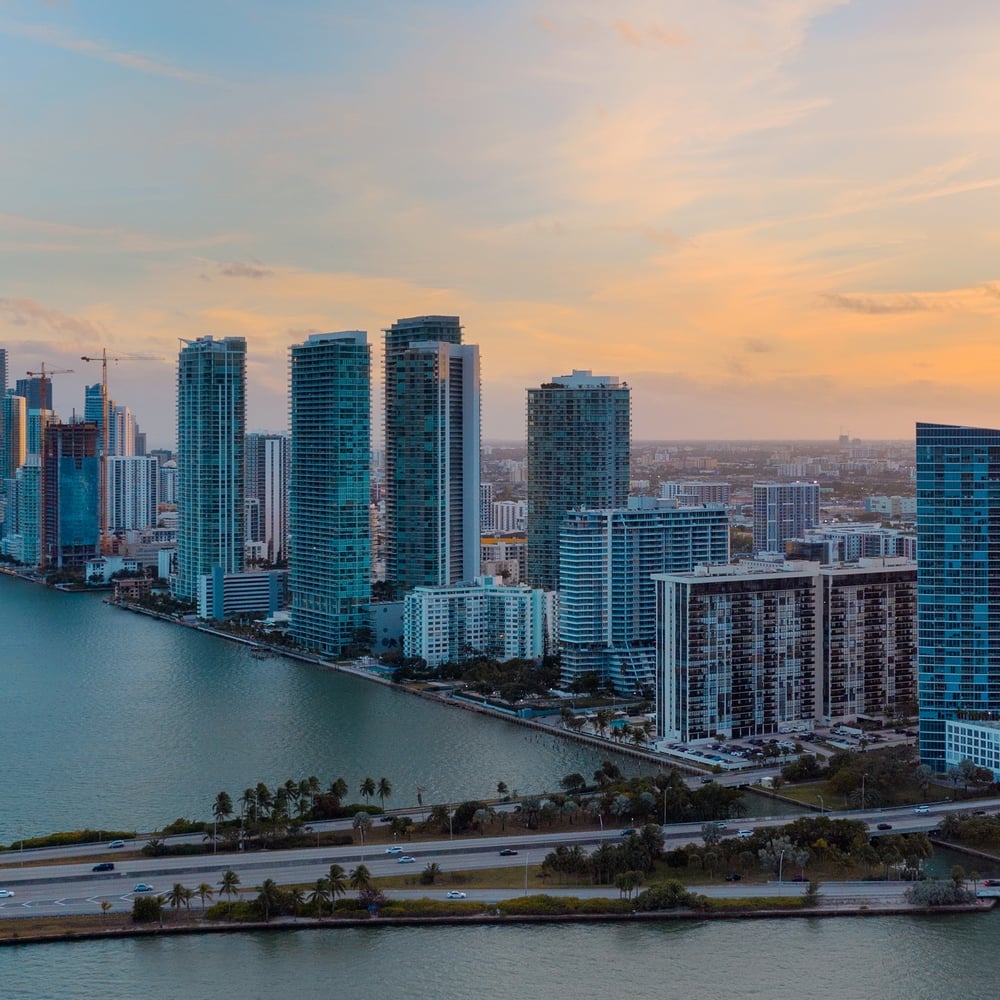
Moving to Miami looks like a vacation from the outside. Warm winters, waterfront neighborhoods, international dining, and a pace of life that never fully slows down. Living here is a different experience than visiting for a long weekend, and the difference usually comes down to details nobody mentions on a beach trip. After years of guiding relocation clients through this market, the pattern is consistent: the people who land well are the ones who chose a neighborhood based on their actual routine, not its reputation. The people who struggle are usually the ones who fell in love with a view and worked backward from there.
Your neighborhood choice affects nearly everything — your commute, your flood risk, your insurance costs, your monthly fees, and how much of Miami you actually get to enjoy day to day. Two homes fifteen minutes apart on a map can live completely differently. The financial side deserves the same scrutiny. A listing price or advertised rent is the opening number, not the real one. Buyers should plan around homeowners insurance, possible flood insurance, property taxes, association fees, special assessments, hurricane preparation, parking, tolls, and maintenance. Renters face their own version of this: application fees, deposits, association approval charges, parking, pet fees, and prepaid rent. A "cheap" unit online can become the most expensive option once every recurring cost is on the table. Flood exposure is also worth understanding early. Miami-Dade County points residents to FEMA's flood hazard maps, which show officially mapped flood risk across the county — information that can influence insurance, financing, and the long-term cost of owning a home.
This guide covers where to live, what to budget for, how to evaluate a property, how commuting actually shapes quality of life, and the mistakes first-time Miami movers make most often. The goal isn't just getting you to Miami — it's making sure the home and neighborhood you choose still work for you once the excitement of the move wears off. Planning a move to South Florida? Our Florida Relocation Process walks you through exactly how we help clients relocate — from neighborhood strategy to closing. Or contact us directly to start the conversation.
Key Takeaways
- Choose a Miami neighborhood based on your daily routine, commute, budget, and storm risk — not its reputation or proximity to the beach.
- Calculate the full monthly cost of a property: insurance, taxes, association fees, parking, utilities, tolls, and maintenance.
- Research flood exposure, building condition, insurance availability, and condo association finances before signing anything.
- Test your commute at the times you'll actually be driving it. Short distances can still mean long, unpredictable drives.
- Keep extra cash on hand beyond the down payment or deposit — for inspections, moving costs, hurricane prep, and the expenses nobody budgets for.
Start by Understanding What "Miami" Actually Means
The first mistake newcomers make is treating Miami as one uniform city. In everyday conversation, "Miami" might mean the City of Miami, Miami Beach, Coral Gables, Doral, Hialeah, Kendall, Pinecrest, Aventura, Homestead, or a dozen other communities inside Miami-Dade County. They're all connected. They don't offer the same lifestyle. Your address will shape:
- How long it takes to get to work
- Whether you can walk to restaurants and shops
- How often you're in the car
- Which local government handles your services
- What kind of housing is available
- Whether parking is included or extra
- How close you are to the ocean or Biscayne Bay
- Which schools serve the property
- Your flood and storm-surge exposure
- Your insurance and association costs
Someone working in Brickell may want to live near a Metrorail station and skip the daily drive entirely. Someone near Miami International Airport may find Doral or the western corridor far more livable. A buyer who wants a yard, a garage, and a quieter street may need to look farther south or west. Before touring anything, write down every place you go weekly — work, school, family, medical appointments, the airport, the gym. Then find the neighborhoods that make those trips manageable. That exercise will tell you more than any "best neighborhoods in Miami" list.
Choosing the Right Miami Neighborhood
There's no single best place to live in Miami. The right neighborhood is the one that fits how you actually want your days to run.
Brickell and Downtown Miami
Brickell and Downtown suit residents who want high-rise living, restaurants, offices, and transit access within walking distance. It can work well for professionals who want to reduce or eliminate their dependence on a car. Most housing here is condominiums and apartments — shared amenities, professional management, controlled access, and less exterior maintenance for you personally. It can also mean higher monthly fees, parking restrictions, elevator wait times, and association approval requirements. Don't assume downtown living erases transportation costs; many buildings charge separately for a second space or guest parking.
Coconut Grove
Coconut Grove blends condos, townhomes, older houses, newer luxury construction, marinas, parks, and walkable commercial streets. It appeals to buyers who want character and bay access without living in the middle of Downtown. Prices and property condition vary widely here. Older homes may need real investment; newer construction commands a real premium. Pay close attention to drainage, tree canopy maintenance, roof age, and wind protection — the landscaping that makes the Grove beautiful also comes with ongoing storm-prep responsibility.
Coral Gables
Coral Gables offers established residential streets, Mediterranean-inspired architecture, office districts, and proximity to the University of Miami. It suits buyers who want a polished, central residential setting. Housing ranges from condos and apartments to historic homes and estate-scale luxury properties. Older homes can be extraordinary, but plumbing, electrical, roofs, and additions deserve a close look — and renovation permitting in the Gables has its own process worth understanding before you buy with big plans.
Miami Beach
Miami Beach offers ocean access, restaurants, nightlife, historic architecture, and a level of name recognition few neighborhoods can match. It's also physically separated from the mainland by Biscayne Bay — a detail that matters more than most newcomers expect, since a home "close to Downtown" on a map may mean a causeway crossing that changes character fast during rush hour. Evaluate parking, flood history, building age, insurance, association finances, and evacuation planning as if you're moving in year-round — because you are, even if the neighborhood was built for visitors.
Wynwood, Midtown, and the Design District
These neighborhoods draw people who want restaurants, galleries, nightlife, and newer buildings close to central Miami. The experience varies block by block — one building sits in the middle of the action, another is on a quiet side street two minutes away. Visit during the day, the evening, and the weekend before deciding. Ask about nearby vacant lots too; this part of Miami is still being built.
Edgewater
Edgewater delivers high-rise bay living with quick access to Downtown, Midtown, and the arts district. Water views are the draw, but waterfront and near-water buildings deserve real diligence — flood exposure, wind coverage, association reserves, and any current or upcoming assessments.
Doral
Doral works well for residents tied to the airport, western Miami-Dade, or logistics and corporate hubs in the area. Condos, townhomes, planned communities, and single-family homes are all available. The tradeoff is the commute to Miami Beach, Brickell, or southern Miami-Dade, plus regular toll-road use.
Kendall and South Miami-Dade
Kendall and the surrounding area offer more suburban housing — shopping centers, schools, townhomes, and single-family homes with actual yards. It suits residents who want space over walkability. The tradeoff is greater car dependence, and a lower purchase price farther out doesn't automatically mean lower total cost once fuel, tolls, and commute time are factored in.
Aventura and North Miami-Dade
Aventura and nearby areas work well for residents centered on northern Miami-Dade, Broward, shopping, and coastal condo living. It's a tougher fit for someone commuting daily to Coral Gables, Kendall, or South Dade — the neighborhood should match the actual geographic center of your life, not just the amenities you want nearby.
Rent Before Buying, or Buy Right Away?
This is one of the most common questions from first-time Miami movers. Renting first makes sense when you're still learning the area, changing jobs, unsure about your commute, or torn between very different neighborhoods. A lease buys you time to understand traffic patterns, weather, building quality, and the real cost of daily life before committing. Buying makes sense when you already know the area, plan to stay several years, have stable finances, and can comfortably absorb ownership costs beyond the mortgage. Neither decision should be made on the assumption that "renting is always wasted money" or "buying is always the smarter move." A rushed purchase in the wrong neighborhood costs far more than a year of renting while you gather real information. Before buying, calculate what you'll have left after the down payment and closing costs — Miami homeowners need room for insurance deductibles, storm prep, repairs, and rising recurring costs. Not sure which path fits your situation? That's exactly what our Florida Relocation Process is built to help you work through.
What It Really Costs to Live in Miami
Most relocation mistakes are financial, and they almost always start with budgeting off the advertised rent or estimated mortgage payment alone.
Housing Payments Are Only the Beginning
Renters should plan for: base rent, parking, water/sewer/trash, electricity, internet, renter's insurance, amenity fees, pet rent, storage, and valet or access charges. Buyers should plan for: principal and interest, property taxes, homeowners insurance, flood insurance, association fees, mortgage insurance, utilities, landscaping, pest control, pool service, and maintenance reserves. A household that technically qualifies for a mortgage can still feel stretched thin once the full ownership cost is on paper.
Homeowners Insurance
Insurance needs to be researched before you write an offer, not during the final days of your inspection period. Premiums depend on location, replacement cost, roof age, construction type, wind mitigation features, claims history, and deductible choices — and availability itself can vary property to property. Florida's insurance market has been shifting, with new capacity entering the state and some homeowners seeing relief on renewal. That doesn't mean every property is cheap or easy to insure; get a quote on the exact address before you assume anything. Ask the insurer what documentation would improve your quote. A wind mitigation inspection, four-point inspection, roof permit, or proof of protective features can move the number meaningfully.
Flood Insurance and Water Risk
A property doesn't need to sit on the ocean to carry real flood exposure. FEMA's flood maps are the starting point, not the finish line — ask about prior water intrusion, talk to an insurance professional, and watch how the surrounding streets drain after heavy rain. For a condo, find out whether the association carries a master flood policy and what it actually covers. It likely doesn't cover your belongings, interior finishes, or temporary housing during a claim. Renters shouldn't skip this either. A landlord's policy typically doesn't protect a tenant's personal property — renter's insurance, and sometimes separate flood coverage, is worth a conversation with an agent.
Property Taxes
New buyers often look at the seller's current tax bill and assume theirs will match. It usually won't — taxes are frequently reassessed after a sale, so estimate based on your purchase price and current millage rates, not the seller's number. Florida homeowners who make a property their permanent primary residence may qualify for a homestead exemption, which the Miami-Dade Property Appraiser's office states can reduce taxable value by up to $50,000 (with additional inflation-linked adjustments in recent years), plus a cap on annual assessment increases. Filing deadlines and eligibility rules matter, so verify directly with the Property Appraiser before counting on the savings. Treat it as a future benefit — not a reason to skip a realistic tax estimate today.
Condominium and HOA Fees
Association fees can cover real value — building insurance, reserves, security, amenities, landscaping, water, or cable. But the size of the fee alone doesn't tell you whether the association is healthy. A lower fee isn't automatically the better deal; it can just as easily mean deferred maintenance or underfunded reserves. Florida's condominium safety and reserve requirements have put more attention on structural inspections and long-term funding in recent years, and older buildings are more frequently facing higher fees or assessments as a result. Before buying into a condo, review: the current budget, reserve study, recent meeting minutes, pending litigation, insurance coverage, special assessments, delinquencies, inspection reports, planned projects, rental restrictions, pet rules, and approval procedures. A beautiful unit can't compensate for a financially unstable building.
Transportation Costs
A car payment is one line item, not the whole picture. Budget for auto insurance, fuel, tolls, parking at home and at work, maintenance, and vehicle depreciation. A less expensive home with a long commute can quietly cost more per month than a more central, pricier one.
Commuting in Miami
Traffic is one of the biggest quality-of-life factors for new residents, and mileage alone won't tell you the truth about a commute. Waterways, limited bridge crossings, school traffic, construction, and rush-hour patterns all change the math. A home eight miles from work can be less convenient than one farther away but better connected to your actual route. Test the drive before you sign anything — same route, same time of day you'd actually be traveling it, in both directions. Then test the trips you make regularly outside of work: family, school, gym, medical care.
Public Transportation
Metrorail serves specific corridors rather than the entire county, so a neighborhood being "urban" doesn't guarantee it's transit-friendly. As of this writing, a standard Metrorail trip costs $2.25, with contactless payment, EASY Card, EASY Ticket, and app-based options available, plus a daily fare cap for unlimited rides. Transit works best when both ends of your trip — home and destination — are genuinely walkable to a station; it works poorly when either end requires a long drive or expensive parking. Always check current fares and route maps directly with Miami-Dade Transit, since both can change.
Buying a Home in Miami
Get Insurance Information Early
Insurability affects your monthly payment, your financing, and your ability to close. Ask about roof age and permit history, impact windows or shutters, the electrical system, plumbing, HVAC and water heater age, prior claims, wind mitigation features, and flood zone and elevation. A renovated kitchen doesn't fix an aging roof or an outdated panel.
Inspect for Moisture and Water Intrusion
Miami's heat, humidity, and rain make moisture inspection especially important. Look for staining, peeling paint, musty odors, warped materials, bubbling drywall, or suspiciously fresh paint. For condos, ask how the association handles common-element water damage that affects multiple units.
Investigate Permits
A renovation looking professional doesn't mean it was permitted. Review permit records for additions, converted spaces, roofs, windows, electrical, plumbing, pools, and major remodels. Unpermitted work complicates financing, insurance, future renovations, and resale.
Understand Wind Protection
Ask how openings are protected in a storm — impact windows and approved shutters affect safety, convenience, and insurance pricing. If shutters are removable panels, confirm they're all present, labeled, and usable, and find out who installs them and how long it takes.
Evaluate the Neighborhood After Rain
A sunny showing tells you nothing about drainage. When you can, revisit the property during or after heavy rain and look for standing water, overwhelmed drains, and flooding near entrances or low points on the street.
Renting in Miami
Confirm the Complete Move-In Amount
Get a written breakdown covering first and last month's rent, security deposit, application fees, association application and deposit fees, pet deposits, elevator deposits, and parking or utility deposits. A low advertised rent means little if the move-in total drains your savings.
Review Association Approval Requirements
Many condo rentals require association approval — application, ID, financials, background screening, sometimes an interview, and processing time. Don't book movers until every approval is confirmed.
Document the Unit's Condition
Photograph and video everything before moving furniture in — walls, floors, appliances, windows, bathrooms, balconies, existing damage. Submit it per your lease's procedure and keep your own copy.
Ask About Building Rules
A lease can allow something the building rules restrict. Check the rules on pets, guests, deliveries, parking, balconies, grilling, noise, and moving hours before you're surprised by them.
Preparing for Hurricane Season
Hurricane preparation is part of life in South Florida, and it's far easier to organize before a storm is approaching than during the scramble. New residents should find out: whether the property is in an evacuation zone, where the nearest shelter is, how windows are protected and who installs shutters, whether the building has a generator and what it actually powers, where vehicles can be parked, how pets will be handled, and what your insurance deductibles look like in a claim. Don't assume a condo generator powers your unit — in many buildings, backup power covers only elevators, emergency lighting, and limited common areas. Keep digital and physical copies of insurance, ID, property records, and emergency contacts, and renters should document their belongings in case they need to file a claim.
Everyday Life in Miami
Heat and Humidity
Miami's climate shapes utility bills, landscaping, and home maintenance year-round. Air conditioning manages humidity as much as temperature — ask how old the system is, how it's serviced, and whether the unit has a moisture history. In condos, confirm who's responsible for the equipment.
Language and Culture
Miami is deeply international, and Spanish is part of daily life across the city. You don't need to be fluent to move here, but a few common phrases go a long way. The cultural range across neighborhoods — food, music, traditions — is one of the city's real strengths, and it's worth exploring beyond the areas built for visitors.
Airports and Travel
Miami International Airport is a major advantage for residents connected to Latin America, the Caribbean, or Europe. Living close by is convenient, but check aircraft noise directly — visit at different times and spend a few minutes outside. Fort Lauderdale-Hollywood may also be worth considering depending on where you're based.
Common Financial Mistakes First-Time Miami Movers Make
- Budgeting from the listing price alone. Build a monthly worksheet covering every recurring cost, plus a separate one-time move-in worksheet — and leave room for a reserve.
- Waiting too long to request insurance quotes. Get quotes during due diligence, and make sure the insurer has accurate roof, construction, and wind-protection details.
- Assuming a condo fee covers everything. Get a written list of what's included, then budget separately for unit insurance, interior repairs, and anything excluded.
- Ignoring special assessments. A manageable monthly fee can sit right next to a large upcoming assessment — read the minutes and financials, and ask directly.
- Underestimating transportation. Tolls, fuel, parking, and time all add up. Drive the actual commute before deciding.
- Draining savings for the move. Keep cash available after closing or deposits for utility setup, temporary housing, deductibles, and repairs.
- Choosing a neighborhood based on vacation experience. A block that's exciting for a weekend may not support a Tuesday. Test groceries, parking, noise, and commute before deciding.
- Assuming every coastal property carries the same risk. Flood risk varies building to building — review maps, elevation, drainage, and insurance quotes for the specific address.
- Buying a renovated home without investigating the work. Fresh finishes can hide structural, electrical, or moisture issues. Use qualified inspectors and check permits.
- Failing to read the rules. Condo and HOA restrictions affect rentals, pets, renovations, and daily life — read the governing documents, not just a verbal summary.
A Practical Miami Relocation Checklist
2–3 months before: Research neighborhoods around your actual commute. Build a full budget. Request insurance estimates if buying. Gather employment, banking, and housing documents. 1–2 months before: Finalize housing, schedule inspections, review association requirements, book movers, compare utility providers, and confirm parking and building access for moving day. 2–4 weeks before: Update your address, transfer prescriptions, organize insurance records, and start assembling storm supplies. Confirm move-in approval and elevator reservations. First month: Test alternate commuting routes, learn nearby grocery and medical options, review parking rules, and register for building or community alerts. Homeowners should also confirm homestead exemption requirements and deadlines with the Property Appraiser.
Frequently Asked Questions
How much money should I save before moving to Miami?
More than the move-in payment alone. Renters should have several months of housing costs, deposits, application fees, and an emergency fund on hand. Buyers should keep funds available after closing for repairs, insurance deductibles, and possible association expenses.
Can I live in Miami without speaking Spanish?
Yes. English covers virtually every official, professional, and daily need. Spanish is widely used throughout the city, though, and a few basic phrases make daily life and social interactions noticeably easier.
Should I bring my current car to Miami?
Compare the cost of transporting, registering, and insuring your current vehicle against replacing it, and get a Miami-area insurance quote before deciding. Also think through where you'll park and whether your household actually needs more than one car.
Is living near the beach practical for a first-time mover?
It can be, as long as the location fits your commute and budget. Weigh bridge traffic, parking, insurance, flood exposure, association fees, and evacuation planning before prioritizing beach proximity.
When is the best time to move to Miami?
There's no universally "right" month. Focus on your employment timeline, lease terms, financial readiness, and your ability to secure the right property — not the calendar.
Thinking about relocating to Miami? I work with buyers, renters, and relocation clients every week who are navigating exactly these decisions. Start with our Florida Relocation Process to see how we guide clients through it step by step, or reach out directly and let's talk about what you're looking for.
Check out this article next